Hidden Risk in Premium Financing: Subpar Infrastructure After the Sale
The greatest risk in premium financing may emerge after the sale when a firm lacks the infrastructure, relationships and long-term discipline to support advisors and clients through changing conditions.
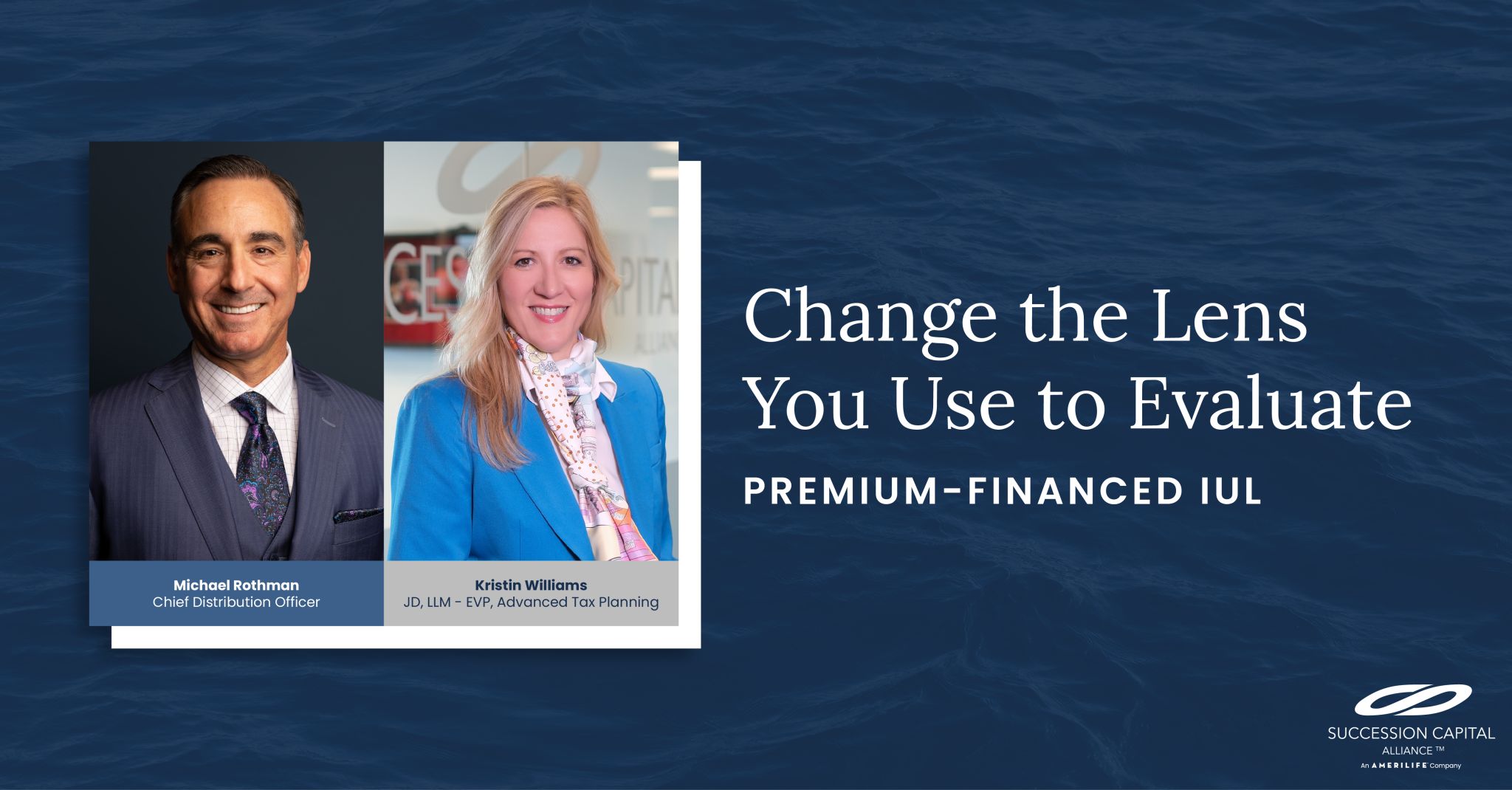
Originally published in Aspire Magazine, September/October 2026, by Michael J. Rothman and Kristin Williams of Succession Capital Alliance.
The Real Risk Is in Support
Many firms can originate a premium-financed life insurance case. The harder test is whether they have the infrastructure, discipline and long-term commitment to support it for decades. Distribution leaders must assess whether a partner can serve advisors, protect clients and complement carrier relationships after implementation, not simply place a transaction.
It Starts with Selling It Right
Problems often begin with how you introduce the strategy. Presenting premium financing as “free” insurance or a strategy that pays for itself creates expectations that changes in loan terms, policy performance or assumptions cannot sustain. The better starting point is whether the client needs permanent life insurance. If so, financing may provide an efficient way to fund premiums without redirecting capital from a portfolio or business. It is leverage used to support capital allocation, not something for nothing.
What 2009 Revealed
The 2008 and 2009 credit crisis stress-tested premium financing at scale. Rates shifted, lenders changed terms or exited, and some clients lost support from the firms that originated their cases. Firms built only to sell struggled. Those with lender relationships, in-force review processes, technical expertise and durable client relationships were better equipped to identify issues, communicate clearly and adjust.
What Responsible Stewardship Looks Like
Responsible stewardship means maintaining the capacity and relationships to act when circumstances change. A support firm should sustain lender relationships that enable substantive discussions about loan terms, carrier relationships that support underwriting conversations and proactive communication that keeps advisors informed. Ask who manages in-force cases, how reviews work and how advisors are contacted when attention is required. Strong firms can explain their process with specifics and evidence.
Questions Worth Asking
Premium financing can remain a useful tool for the right client when it is properly positioned and supported. Distribution leaders should ask how a firm helps advisors explain the strategy, how it manages in-force cases and how it performed through changing market conditions. They should also examine the quality of its lender and carrier relationships. Direct, detailed answers indicate depth. General assurances may signal service gaps that later become advisor and client problems.
The Bottom Line
The hidden risk in premium financing is not the strategy itself. It is choosing a firm that can originate a case but cannot sustain it. The strongest partners add resources while keeping the advisor-client relationship central throughout the arrangement.
To read the full article on Aspire Magazine, click here.